
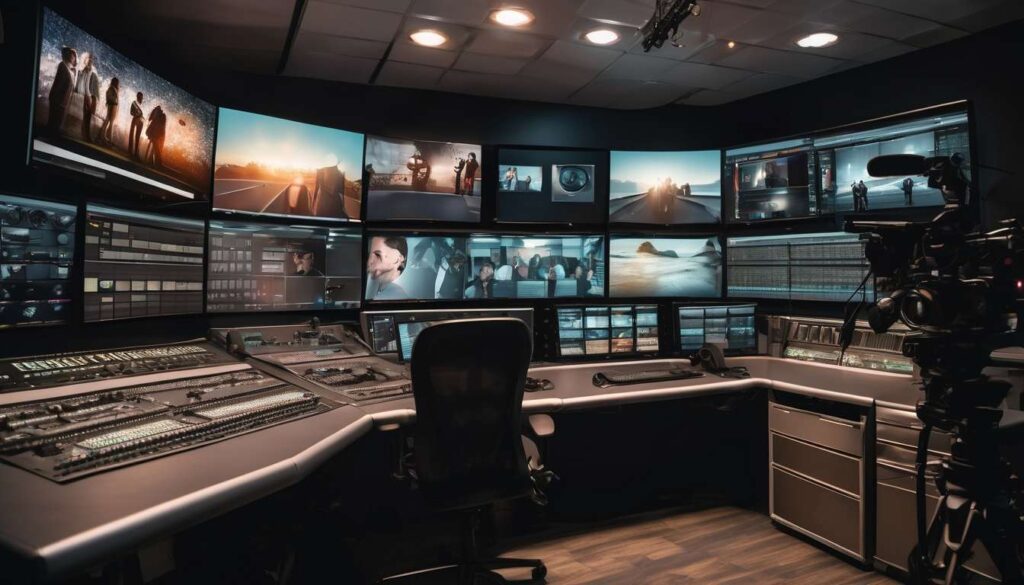
Growing up in a cramped studio, we watched a single laptop transform into the nerve center of our productions — scheduling, lighting profiles, and post-production workflows all converging on one screen.
We learned to trust software to manage the chaos:
- Call sheets that update in real time.
- Automated scene logging that saves hours.
- AI-assisted editing that trims takes while preserving creative choices.
As operators and creators, we adapted quickly, refining on-set protocols and privacy safeguards alongside new capabilities.
That shift didn’t just speed tasks; it reshaped roles,
- letting technicians become creative partners, and
- allowing performers to focus more on craft than logistics.
Yet every gain brought questions about data control, consent workflows, and ethical use of AI-generated tools.
In this article, we share how production software has modernized our studios, the operational benefits we’ve measured, and the policies we implemented to ensure efficiency doesn’t outpace responsibility.
Studio Digital Transformation
We’re digitizing studio workflows to streamline production, from asset management to cloud-based editing and secure distribution.
We’re embracing studio automation to reduce repetitive tasks, so our team can focus on creative collaboration and mutual support.
We’ll integrate AI postproduction tools to:
- Speed editing.
- Improve color grading.
- Handle routine audio cleanup.
Final creative decisions remain with the team, ensuring human oversight despite automation.
We’re committed to performer privacy and protection, applying:
- Encryption.
- Access controls.
- Consent-tracking.
Every participant should feel respected and protected.
We’ll build shared dashboards that centralize assets, metadata, and approval status, creating transparency and belonging across departments.
We’ll standardize file naming, backups, and versioning to prevent friction and mistrust during handoffs.
We’ll train staff on ethical data handling and inclusive communication, reinforcing that technology serves people, not the other way around.
By aligning tools with our values we’ll foster a dependable, accountable workflow that supports creativity, safety, and community — making it easier for everyone involved to contribute confidently and feel part of something professional and caring.
Scheduling and Call Sheet Automation
We will automate scheduling and call sheet generation to reduce manual coordination, keep everyone informed in real time, and ensure accurate, consent-aware rostering for every shoot.
We build shared calendars that respect performer privacy, letting talent control which contact details and availability are visible.
Studio automation ties bookings to consent records and testing logs so call sheets only list personnel cleared for specific scenes, reducing last-minute confusion.
Role-based access controls present different views to different users:
- Crew see technical details relevant to their work.
- Performers see only what’s relevant to them.
- This fosters trust and inclusion.
Notifications and reminders adapt to individual needs:
- Notifications go out via preferred channels with read receipts.
- Smart reminders adjust for travel or prep requirements.
Integration with downstream systems automates follow-through:
- Payroll is updated from confirmed bookings.
- AI postproduction queues are scheduled automatically once a shoot is confirmed.
- This saves time and prevents bottlenecks.
We maintain audits and logs for compliance, and we iterate with feedback from everyone involved.
The overall goal is a process that is fair, transparent, consent-aware, and collaboratively owned.
On-Set Technical Workflows
On-set coordination and real-time workflows
We streamline technical workflows so camera, lighting, sound, and safety teams can coordinate in real time. This lets teams follow consent-linked shot lists and resolve issues without delaying production.
We use studio automation to reduce repetitive tasks, sync cues, and log takes so everyone knows status at a glance.
We integrate consent metadata and privacy flags into each cue, ensuring crew respect boundaries while staying efficient.
We run short, focused rehearsals that verify lighting and sound with minimal intrusion.
We keep communication channels open and respectful so team members feel included and safe.
Problem response and escalation
When a problem arises, we follow predefined escalation steps that preserve dignity and maintain pace:
- Pause.
- Confirm consent state.
- Fix.
- Resume.
We train together on these protocols, reinforcing shared responsibility for comfort and quality.
Human oversight and roles
While AI postproduction tools are part of our pipeline later, on set we prioritize human oversight. Clear roles and workflows build trust and belonging across cast and crew.
AI-Assisted Postproduction
We use AI-assisted tools to accelerate editing, metadata tagging, and quality checks while keeping final creative control and sensitive decisions with human editors.
We embrace AI postproduction to streamline repetitive tasks:
- Scene assembly
- Color matching
- Baseline audio cleanup
These automations let our team focus on storytelling and aesthetics.
By integrating studio automation into post workflows, we reduce turnaround times and maintain consistent standards across releases.
We make choices together, sharing tools and training so every crew member feels included and confident using new systems.
We adapt templates and review chains that let us audit changes, ensuring accountability and transparent collaboration.
While we leverage machine tagging to improve discoverability and workflow efficiency, we remain attentive to performer privacy and handle sensitive metadata with strict access controls.
Our approach balances innovation with respect: AI postproduction enhances productivity and quality, and our human editors preserve nuance, context, and consent.
Together, we create polished content faster without sacrificing the values that keep our team and talent united.
Performer Privacy Safeguards
We protect performers’ personal data and image rights through strict access controls, encrypted storage, and clear consent protocols.
Key technical safeguards:
- Encrypted storage for all raw footage and backups.
- Role-based permissions so only necessary staff can run sensitive AI postproduction tasks.
- Temporary credentials for limited-time access.
- Comprehensive access logging so every access is recorded and auditable.
Consent and data handling:
- Versioned consent forms attached to each clip to ensure AI tools only process material with documented agreement.
- Minimized retained metadata and anonymized backups to reduce privacy risk.
We build studio automation systems that limit who sees raw footage, grant temporary credentials, and log every access so our team and performers feel secure and included.
We won’t silo performers; we invite them into workflow choices, letting them opt into edits, masks, or anonymization before release.
Performer participation and control:
- Performers can opt into or out of specific edits, masking, or anonymization.
- Performers can request edits, takedowns, or audit logs through transparent communication channels.
- We act quickly on requests to maintain trust.
We maintain transparent communication channels where performers can request edits, takedowns, or audit logs, and we act quickly.
We prioritize performer privacy as a shared responsibility, using clear policies and practical tools that reinforce trust.
Overall approach:
- Combine technical safeguards (encryption, access controls, logging).
- Implement policy safeguards (versioned consent, role-based access).
- Foster collaborative workflows (performer opt-in, transparent requests).
- Continuously review and improve practices to keep the environment safer and more connected.
By combining technical safeguards with respectful collaboration, we create a safer, more connected production environment.
Data Governance Practices
We establish clear data ownership, retention, and access policies so everyone knows what data we collect, how long we keep it, and who can use it.
We define roles and responsibilities so team members feel included and accountable, mapping datasets to owners and custodians.
We apply least-privilege access controls and audit trails to reinforce trust, and we document retention schedules aligned with legal and ethical obligations.
We encrypt sensitive assets at rest and in transit, isolate personally identifiable information, and use tokenization for performance logs tied to performer privacy.
We integrate governance into studio automation workflows so policy checks happen automatically during ingest, editing, and distribution.
- Provenance metadata is required for files and edits, enabling traceability through AI postproduction steps and third-party tools.
We run regular risk assessments, maintain incident response plans, and hold periodic reviews with cross-functional stakeholders.
By combining technical controls, transparent policies, and shared responsibility, we create a data governance framework that keeps our community safe and respected.
Role Evolution and Training
As our tools and workflows evolve, we’ll retrain teams, redefine roles, and build clear career paths so everyone can safely and confidently operate new production technologies.
We’ll create structured training that covers:
- Studio automation interfaces
- AI postproduction toolsets
- Protocols that protect performer privacy
These trainings will explain both how and why processes change, so staff understand the rationale behind new workflows.
We’ll map skills to roles so camera operators, editors, and producers can transition without losing status or income.
This includes:
- Mentorship programs
- Measurable competency milestones
- Clear career-path documentation
We’ll encourage cross-training so small teams stay resilient and individuals feel valued for broadened expertise.
We’ll standardize documentation and hands-on workshops, pairing newer hires with experienced staff to maintain institutional knowledge.
We’ll solicit feedback regularly and adapt curricula to real production challenges, keeping learning collaborative rather than punitive.
We’ll set clear expectations about responsibilities around sensitive content handling and technical safeguards, so trust and belonging grow alongside efficiency gains from automation and AI tools.
Ethical AI and Consent Policies
We’ll establish clear ethical AI and consent policies that require informed, revocable consent from performers and enforce strict limits on how automated tools can analyze, alter, or distribute their likenesses.
Consent will be a living process:
- Documented.
- Time-limited.
- Easily withdrawn.
This ensures everyone on the team feels safe and respected.
Policy integration into workflows:
- Integrate policies into studio automation workflows and AI postproduction pipelines.
- Ensure any automated decision or transformation has an auditable approval step.
Privacy and data protection:
- Commit to minimal data retention.
- Use role-based access to protect performer privacy.
- Avoid automated profiling or sharing of biometric data without explicit opt-in.
Participation, training, and governance:
- Offer training and open forums so crew and performers can contribute to policy updates.
- Conduct regular audits and publish transparency reports.
- Partner with legal and ethics advisors to keep practices current.
Overall commitment:
Together, we’ll balance innovation with human dignity, making ethical use of technology a core part of how our studio operates.
How does the studio handle international legal compliance and distribution licensing for adult content across multiple countries?
We handle international legal compliance and distribution licensing by building trusted partnerships and clear processes.
We consult local counsel in each market.
We secure age and consent documentation.
We obtain region-specific licenses and DRM agreements.
We centralize records, monitor changing laws, and adapt contracts to local requirements.
We share resources and training with our teams so everyone feels supported and confident in meeting compliance and distribution obligations across borders.
What contingency plans are in place for major technical failures (e.g., data center outage, catastrophic hardware loss) that could halt production or lead to permanent data loss?
We’ve prepared layered contingency plans for major technical failures to keep everyone safe and supported.
We maintain offsite, encrypted backups with geographically dispersed data centers and regular integrity checks.
We’ve got failover systems and hot spares to resume operations quickly.
We have documented disaster-recovery procedures and incident response teams available 24/7.
We run frequent drills, keep clear communication channels for staff, and review our plans after every incident to improve.
How are third-party vendors, contractors, and freelancers vetted and monitored to ensure consistent adherence to the studio’s technical, privacy, and ethical standards?
We assess vendors, contractors, and freelancers through standardized onboarding.
- We require background checks, signed NDAs, security questionnaires, and proof of certifications.
We monitor ongoing compliance and performance.
- We conduct technical audits, periodic performance reviews, and spot checks.
We provide guidance, training, and a feedback loop.
- We provide clear guidelines, training, and a feedback loop so everyone feels supported and accountable.
We enforce standards and take corrective action when necessary.
- If standards slip, we escalate corrective actions, pause engagements, or terminate agreements to protect our technical integrity, privacy, and shared values.
Conclusion
You’ve seen how production software reshapes adult video studios — streamlining schedules, automating call sheets, and tightening on-set tech workflows.
AI speeds editing while privacy safeguards and data governance protect performers.
Roles shift, demanding new training, and ethical AI plus consent policies keep practices responsible.
Embracing these changes helps you run safer, more efficient productions that respect talent and comply with regulations, positioning your studio to innovate sustainably as the industry evolves.